
Space governance you can step inside.
Read the launch brief →howdy [at] diplospace · orgSupport the work →
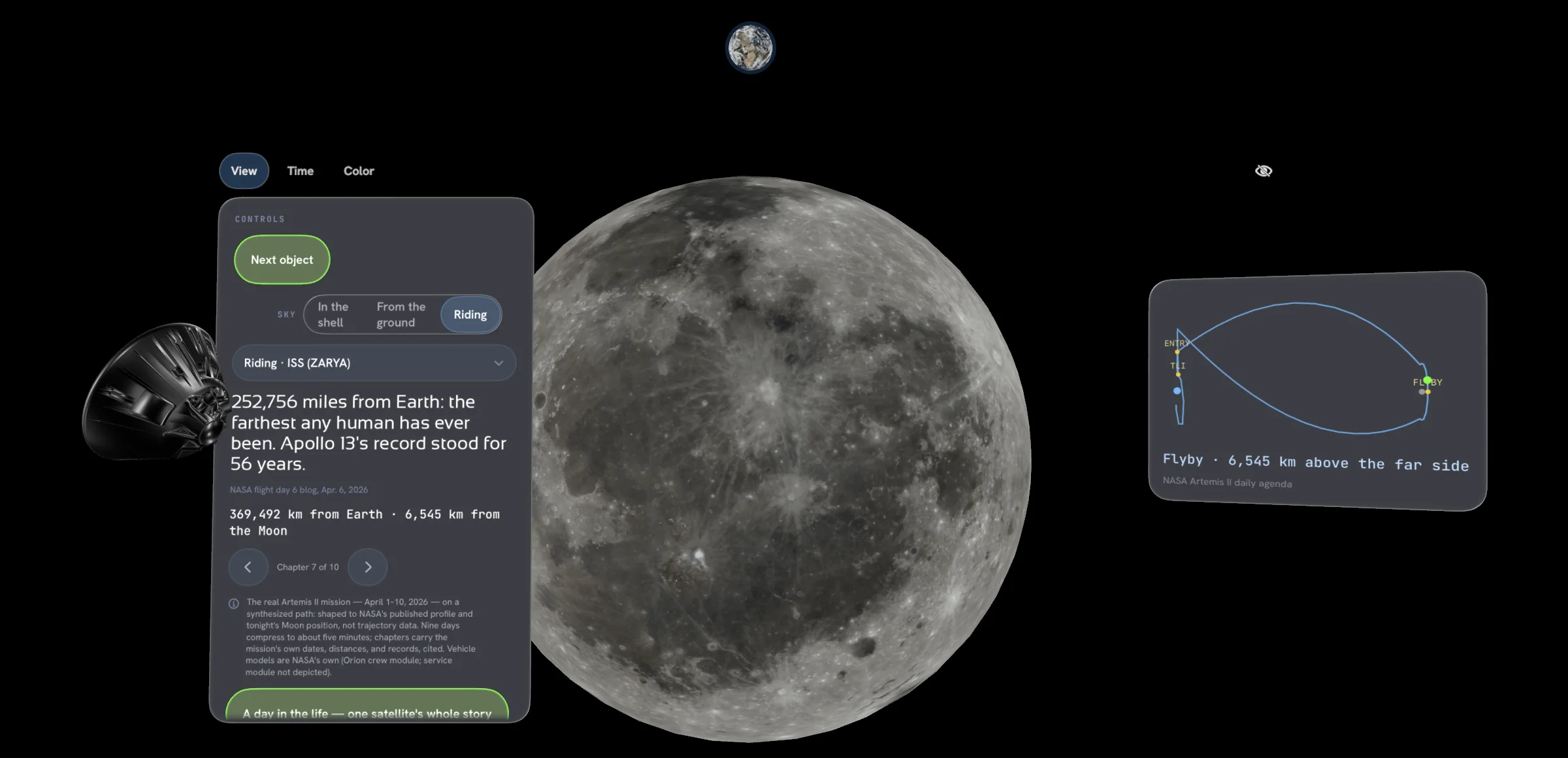
Atlas turns the environment diplomats argue about into things you can rotate and read. Each instrument asks a governance question: who operates this, and where must actors coordinate.
Artemis II after the far-side flyby, on Apple Vision Pro · Simulator capture
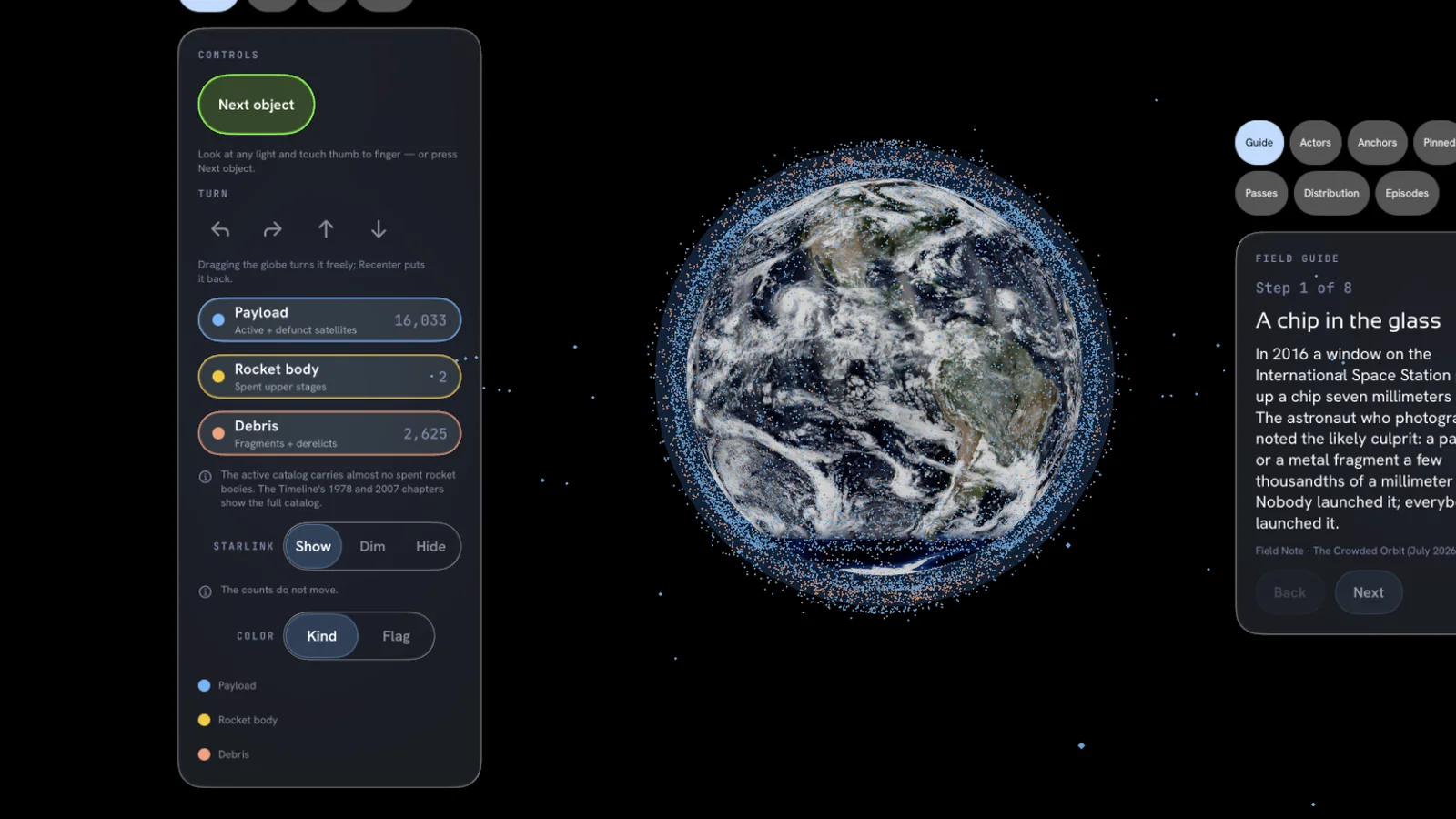 PublishedOrbitWho operates the crowded shells
A globe of cataloged objects, grouped by shell. Tap one for its flag; panels read the actor mix and where coordination matters most.
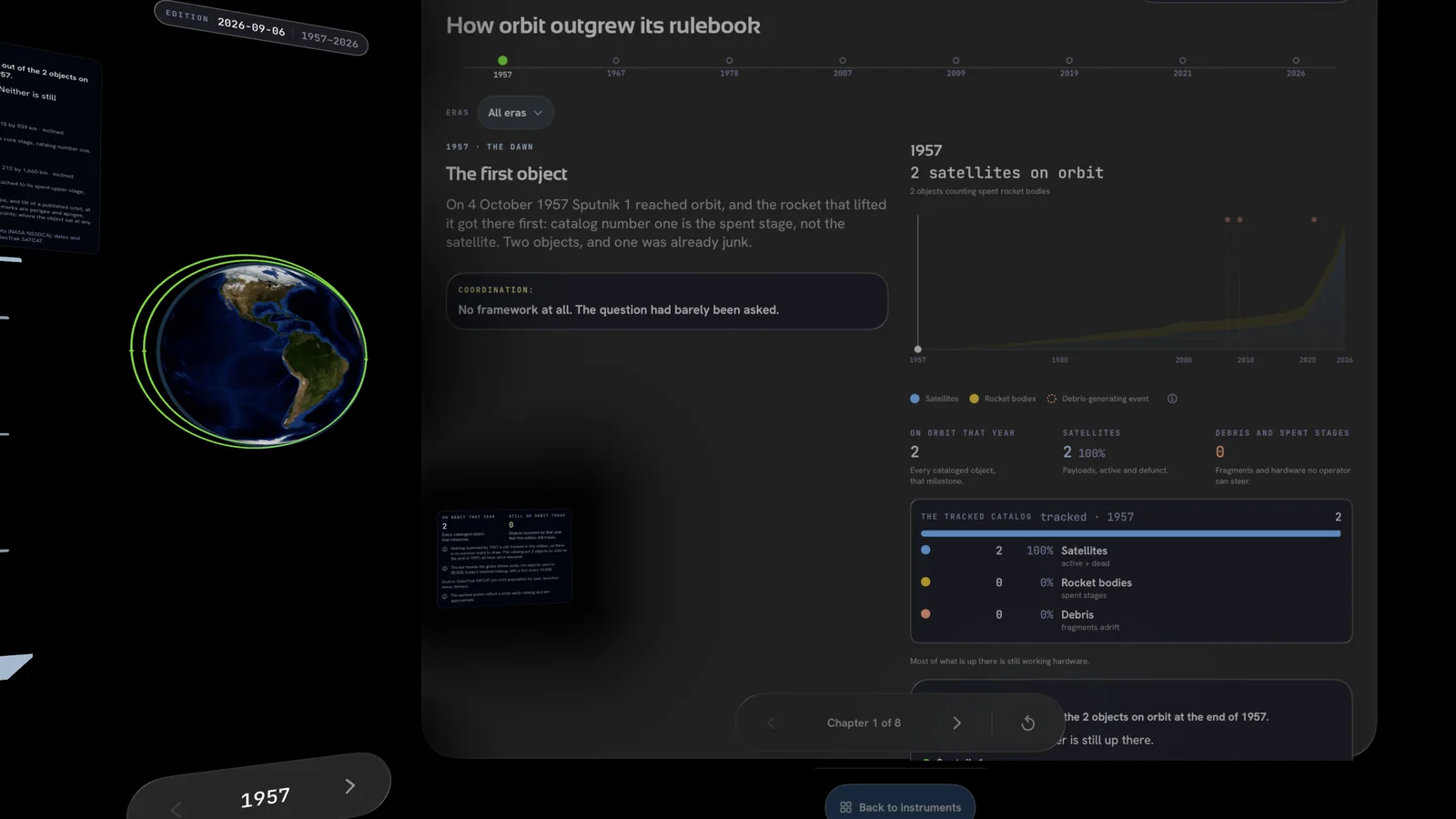 PublishedTimelineHow orbit outgrew its rulebook
A scroll story of how orbit filled up, from the real catalog. Each treaty, test, and collision marks where coordination held or failed.
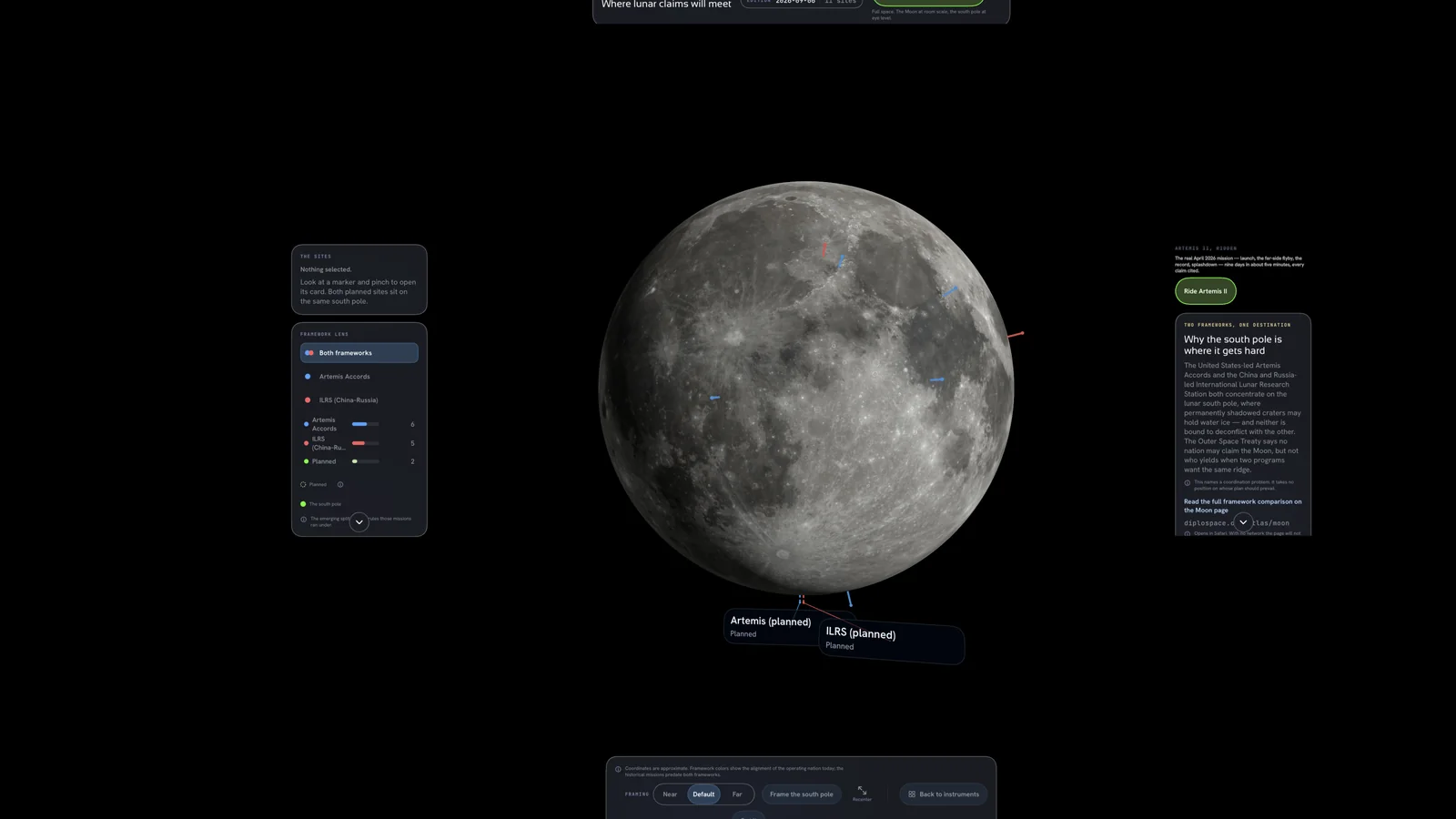 PublishedMoonWhere lunar claims will meet
A NASA-derived Moon showing the landing sites, and why the Artemis Accords and the China-Russia ILRS both point at the same south pole.
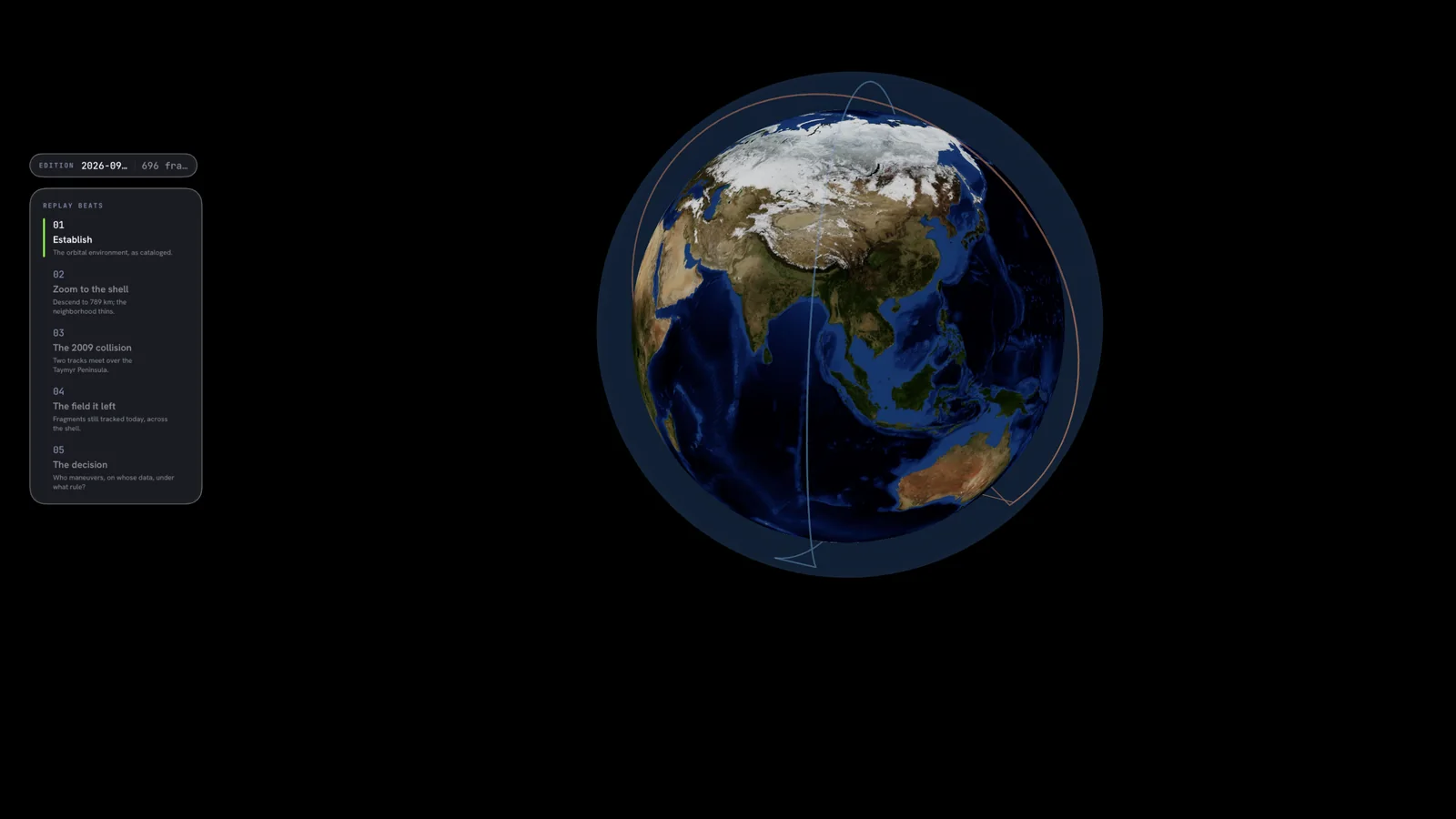 PlayableConjunctionThe collision nobody prevented
Two working satellites, two operators, one converging path, and no rule on who moves. A self-guided rehearsal of the documented 2019 Aeolus–Starlink near-miss.
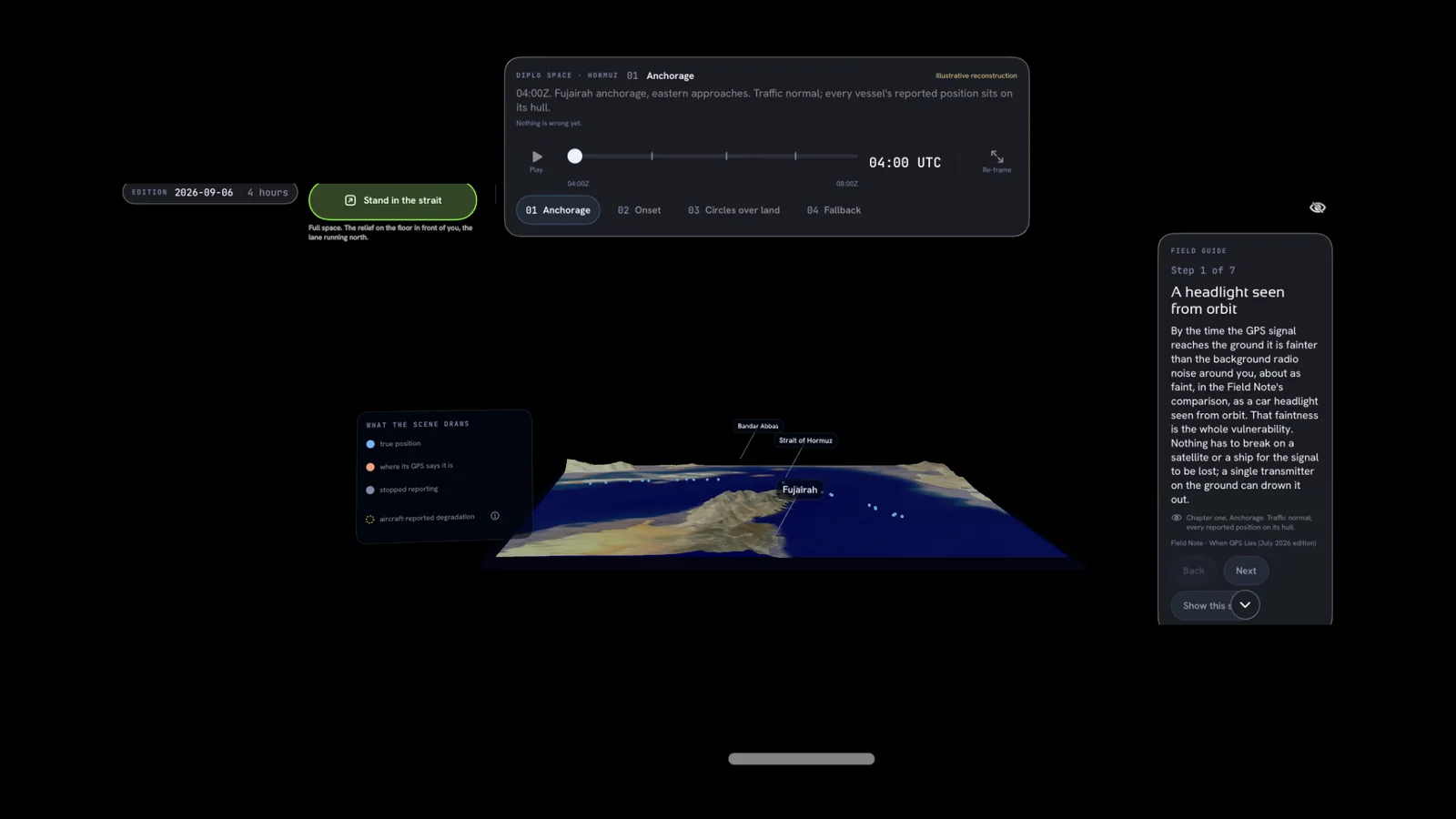 ReplayHormuzWhat GPS interference looks like from above
Strait of Hormuz shipping replayed under GNSS interference: reported positions jumping inland, ships going dark, and why a navigator must tell the two apart.
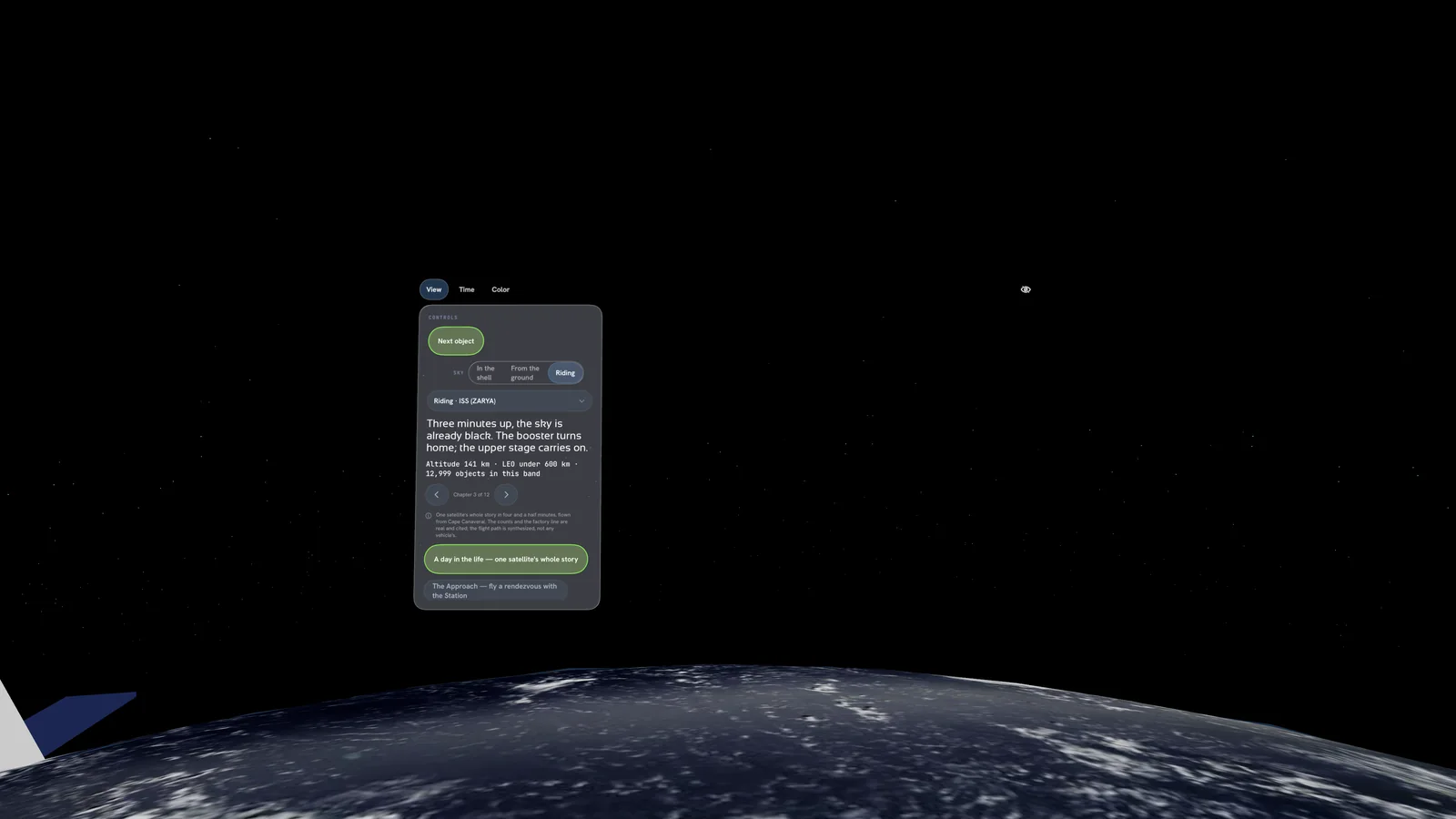 Private betaLifeOne satellite's whole story
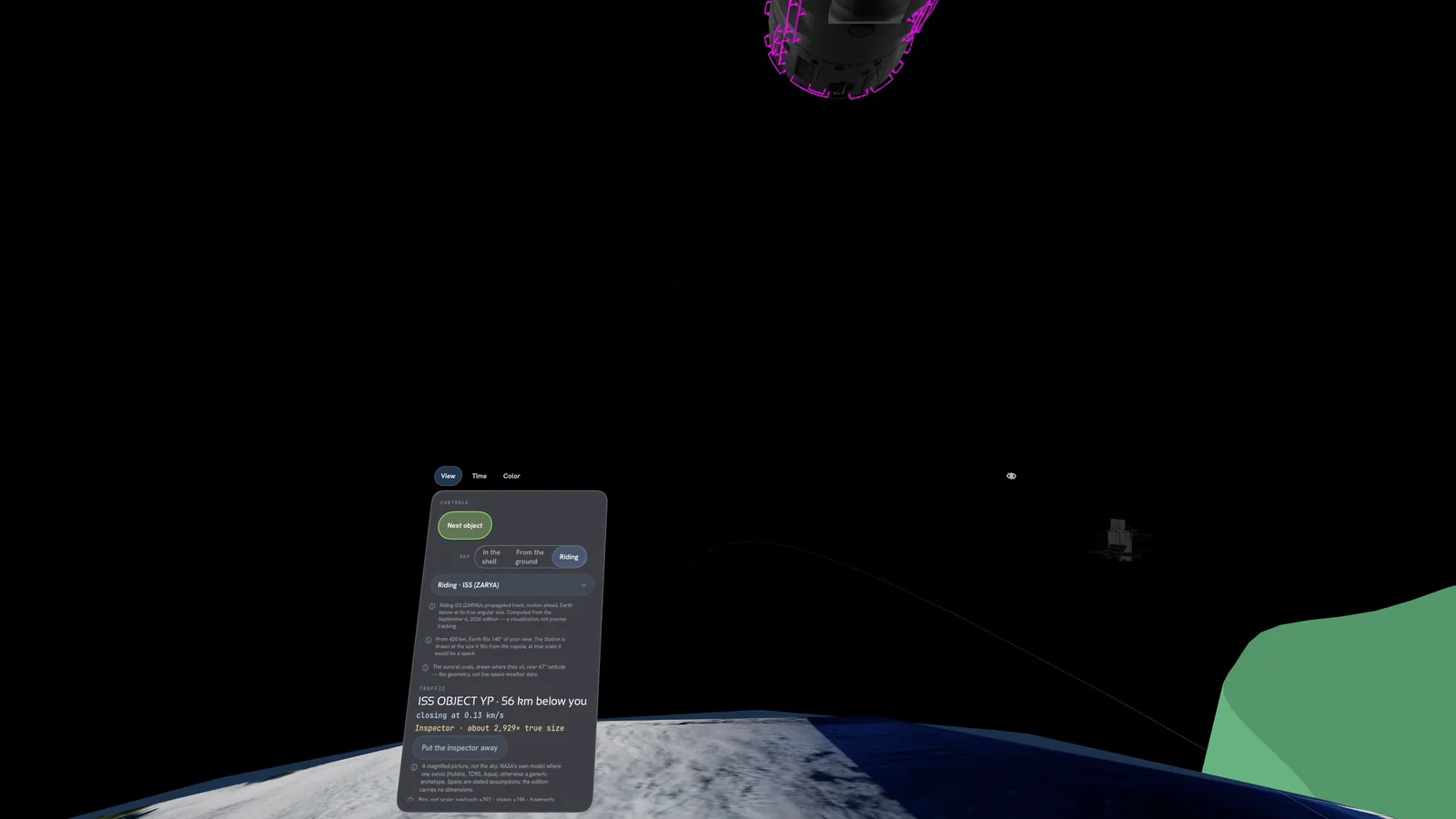
Ride one satellite, factory to deorbit burn, in four and a half minutes. Its path is synthesized and says so; the traffic is cataloged.
Six simulator captures from the headset build. Open a card for what it does.
Diplo Space built the working Atlas independently. We are now seeking a small group of founding partners to take the platform through its public institutional release: new instruments, verification, accessibility, immersive development, and public deployment.
Founding partnerships from $50,000. The resulting public work remains independently governed and openly available.
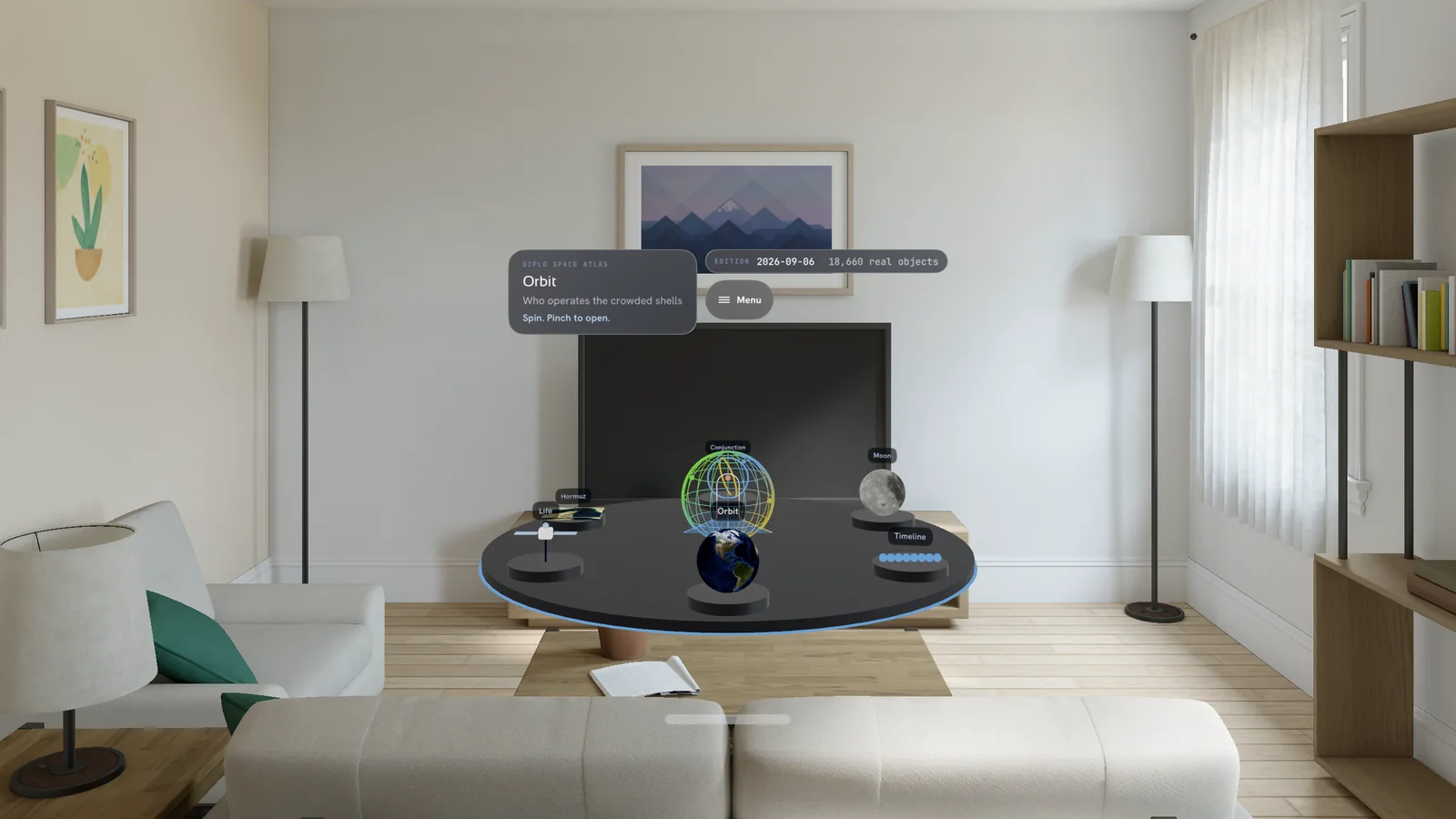
Six instruments on one tabletop, each opening into a space you can stand inside. Where a ride’s flight path is synthesized, it says so on screen. An iPhone companion lets a facilitator run demonstrations.
Atlas Spatial is a private beta, not on the App Store. Demonstrations for partners, funders, and pilot organizations. Request a demonstration
The instruments are educational reads, not operational tools, shipped on the record’s standard: dated editions, primary sources, and a plain line between modeled and real.